Golf Cart with Clubs Key Fob: A Designer’s Review
As an embroidery designer who spends more time staring at digitized paths than actual thread, I have learned that not every cute concept translates well into a stitched reality. When I first pulled up the Golf Cart with Clubs Key Fob design on my screen, my initial reaction was one of cautious optimism. It is a niche theme, certainly targeting the Sports category, but it carries a specific charm that appeals to a dedicated demographic. For those of us running small shops or selling on Etsy, finding designs that speak directly to a hobbyist’s passion is gold. However, the real test is never how it looks on a monitor; it is how it behaves under the needle.
First Impressions and Visual Personality
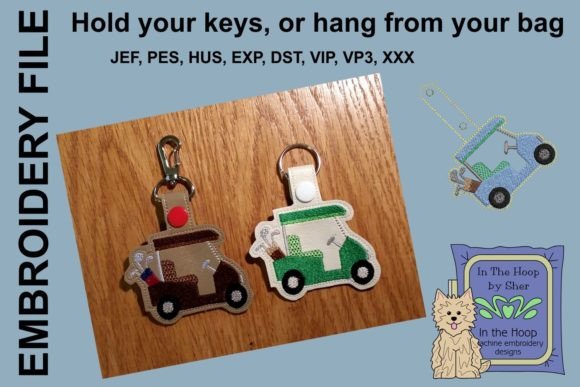
The layout of this machine embroidery design feels compact and purposeful. It does not try to be a sprawling landscape; instead, it focuses on the iconic silhouette of a golf cart paired with the essential clubs. This simplicity is its strength. In the world of Embroidery, especially for small items like key fobs, clutter is the enemy. The visual personality here is playful yet recognizable. It creates a mood of leisure and weekend vibes, which is exactly what a golfer wants to feel when they grab their keys.
I appreciate that the design seems to balance detail with stitchability. Too many tiny details in a small format often result in a muddy finished product, where individual elements bleed into one another. This design appears to respect the limitations of small-scale stitching. The shapes are distinct, allowing the eye to separate the cart from the clubs without straining. For a designer, this means less time tweaking density maps and more time focusing on color selection.
Real-World Application: Beyond the Key Fob
While the title specifies a key fob, limiting this digital embroidery file to just that application would be a mistake. I recently worked on a custom order for a local pro shop that needed branded merchandise for a charity tournament. They wanted something subtle for a tote bag design and something slightly larger for a sweatshirt embroidery project. This design fit both needs surprisingly well.
For the tote bags, I scaled the design down slightly and used a contrasting thread colors scheme against a canvas background. The result was a clean, professional look that didn’t overwhelm the fabric. For the sweatshirts, I increased the size and paid close attention to the stitch density. Because sweatshirt fleece is thick and textured, a design with too much saturation can cause puckering. This design’s open areas allowed the fabric to breathe, resulting in a soft hand feel rather than a stiff, cardboard-like patch.
I also see potential for this as an embroidered patch. Patches are trending heavily in the craft business sector right now. If you stabilize properly and use a tight satin stitch border, this golf cart motif could become a bestseller for Etsy seller accounts specializing in sports memorabilia. It works as a personalized gift for Father’s Day, retirement parties, or club memberships.
Navigating Fabric and Hoop Constraints
Every designer knows that fabric choice can make or break a project. When using this design on thin fabric or stretchy materials like jersey knits for custom apparel, stabilization is non-negotiable. I recommend a cut-away stabilizer for garments that will be washed frequently, such as baby embroidery items or active wear. Although this is a golf theme, parents often buy sports-themed onesies for infants, so the versatility is there if you adjust your technique.
Be cautious with dark fabric. If you are stitching white or light-colored threads on navy or black material, you must ensure your underlay stitches are sufficient to prevent the background fabric from showing through the top stitches. A quick test on scrap fabric is essential here. I always stitch a sample on the actual garment material before committing to the final embroidery project. This saves time, thread, and customer trust.
Regarding hoop size, since this is intended for key fobs, it likely fits within smaller hoops, such as 4x4 or 5x7 inches. However, always check the specific dimensions in the file description. If you plan to scale it up for a pillow cover or a kitchen towel, ensure that the resolution holds up. Pixelation isn't an issue in vector-based digitizing, but stitch integrity can suffer if a design meant for a small area is blown up too large without adjusting density.
Commercial Viability and Brand Consistency
For small shop product lines, consistency is key. This design offers a clean aesthetic that aligns well with boutique branding. It doesn’t look cheap or overly generic. When customers see a well-executed stitch out, it builds confidence in your brand. Whether you are creating holiday embroidery gifts for the golf enthusiast in your life or producing bulk orders for a corporate event, the professionalism of the design matters.
Using this in commercial embroidery requires due diligence. Always confirm the licensing terms provided with the embroidery file. Some designers allow unlimited sales of finished physical items, while others restrict digital redistribution. As a responsible creative entrepreneur, respecting intellectual property protects your business reputation. Assuming the license permits commercial use of finished goods, this design is a strong candidate for high-margin items like monogrammed caps or premium applique design overlays on jackets.
Practical Designer Notes for Best Results
To get the most out of the Golf Cart with Clubs Key Fob, consider these technical tips:
- Test Stitch First: Never skip the test run. Use the same fabric and stabilizer combination you plan to use for the final product.
- Check Thread Contrast: Ensure your thread colors contrast sufficiently with the fabric. A low-contrast combination can make the details disappear, especially from a distance.
- Review Stitch Density: If the design feels too dense for your fabric, consider adding a layer of tear-away stabilizer or switching to a lighter weight thread.
- Inspect Small Details: Zoom in on your digitizing software. Look for any potential jump stitches or loose ends that might need trimming after completion.
- Mockup Verification: Create a printable mockup or use digital preview tools to see how the design looks on different colored backgrounds before stitching.
- Confirm File Formats: The description mentions multiple embroidery file formats. Ensure you download the correct format for your specific machine brand to avoid conversion errors.
In conclusion, this design is a solid addition to any sports-themed portfolio. It balances charm with technical practicality, making it suitable for a wide range of applications from key fobs to apparel. By paying attention to fabric choice, stabilization, and stitch quality, you can turn this simple design assets into a high-value finished product that customers will love. It is a reminder that in embroidery, the best designs are often those that respect the medium while delivering a clear, joyful message.