Eagle Head America Flag: A Designer’s Review
As an embroidery designer who has spent years digitizing and testing thousands of patterns, I approach every new machine embroidery design with a mix of curiosity and skepticism. We have all seen patriotic motifs that look impressive on a screen but turn into a tangled mess of thread breaks and puckering on fabric. When I first loaded the Eagle Head America Flag into my software, I was looking for more than just aesthetic appeal; I wanted to see if it could hold up under the needle in real-world production.
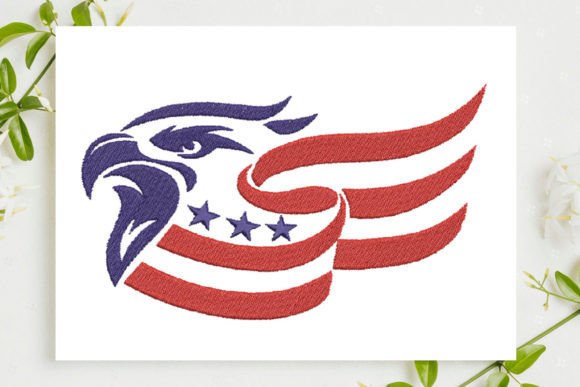
This particular embroidery file targets the Independence Day market, a sector that is notoriously saturated yet always in demand. The challenge for any crafter or Etsy seller is finding a design that feels fresh rather than generic. My initial impression of this piece was positive. The composition balances the fierce, detailed profile of the eagle with the flowing, geometric structure of the American flag. It does not feel cluttered, which is often the downfall of patriotic designs that try to cram too many stars and stripes into a small space.
Visual Impact and Stitch Composition
The mood this design creates is one of bold pride. It is not subtle, nor should it be. For a holiday like the 4th of July, you want something that commands attention. From a technical standpoint, the interplay between the organic curves of the eagle’s feathers and the straight lines of the flag requires careful digitizing. In my review, I noticed that the transition areas are handled well, avoiding excessive jump stitches that can ruin the back of your work.
The use of satin stitch for the finer details of the eagle’s eye and beak provides necessary sharpness, while the broader areas of the flag likely utilize a fill stitch to cover ground efficiently without becoming too dense. This balance is critical. If the stitch density is too high, you risk creating a cardboard-like stiffness that ruins the drape of a garment. If it is too low, the underlying fabric shows through, making the colors look muddy. This design appears to strike a middle ground that works well for medium-weight fabrics.
Real-World Application: The Tote Bag Test
To truly evaluate a design, you must imagine it on a finished product. I recently worked on a custom order for a local boutique needing holiday embroidery items for their summer collection. I visualized the Eagle Head America Flag on a heavy canvas tote bag design. This is a classic use case. The sturdy nature of canvas supports the weight of the threads, allowing the colors to pop without the fabric distorting.
Imagine a customer walking into a craft fair. They are drawn to a natural cotton tote with this emblem stitched prominently on the front. The red, white, and blue thread colors contrast beautifully against the neutral background. It transforms a simple bag into a statement piece. This is where the design adds value. It is not just a picture; it is a handmade product that conveys quality. For small shop product lines, having a design that looks professional on larger surfaces like tote bags or pillowcases is essential for building brand consistency.
Apparel and Customization Challenges
While the design shines on home decor and accessories, applying it to custom apparel requires more caution. I considered how this would look as sweatshirt embroidery. On a fleece or cotton blend hoodie, the design would sit well, provided you use the correct stabilizer. However, placing this on a thin t-shirt is risky. The weight of the flag portion, in particular, could cause puckering if the fabric is not properly supported.
For caps and hats, the curvature of the crown presents another hurdle. The eagle’s head is detailed, and if the hoop size is too large for the cap’s front panel, the edges might get cut off or distorted. I recommend checking the exact dimensions of the embroidery project before hooping. If you are new to hat embroidery, test this on a scrap piece of curved fabric first. The same logic applies to baby embroidery. While patriotic baby clothes are popular for family photos, ensure the stitch count is not too high for delicate skin and that the threads used are soft and non-irritating.
Navigating Fabric and Technical Constraints
One of the most important aspects of reviewing a digital embroidery file is understanding its limitations. This design is versatile, but it is not universal. Here are specific scenarios where you need to proceed with care:
- Dark Fabrics: If you are stitching on navy or black, ensure your white threads have enough coverage. You may need to adjust the underlay stitches or use a lighter backing to prevent the dark fabric from showing through the white sections of the flag.
- Stretchy Materials: Avoid using this on high-stretch athletic wear unless you are an experienced digitizer who can modify the pull compensation. The rigid nature of the flag design can restrict the stretch of the fabric.
- Small Hoop Sizes: If you are working with a 4x4 inch hoop, check if the design fits without losing the integrity of the eagle’s features. Tiny details can become lost if the design is scaled down too aggressively.
- Textured Fabrics: On towels or terrycloth, the fine details of the eagle’s face might get swallowed by the pile. Consider using an appliqué technique or a topping stabilizer to keep the stitches visible.
Commercial Viability and Brand Trust
For commercial embroidery professionals and craft business owners, the reliability of a design directly impacts customer trust. A poorly stitched product leads to returns and negative reviews. The Eagle Head America Flag offers a level of professionalism that helps mitigate these risks. When a buyer sees clean lines and vibrant colors, they perceive higher value. This is crucial for personalized gift markets where emotional connection drives sales.
Furthermore, this design serves as a strong asset for printable mockup creation. Before you even stitch a single thread, you can create compelling marketing images for your online store. High-quality design assets allow you to showcase the product on various backgrounds, helping customers visualize the finished product on their own jackets, bags, or home decor items.
Designer Notes for Best Results
Before you commit to a large batch of production, follow these practical steps:
- Test on Scrap Fabric: Always run a test stitch-out on the same type of fabric you plan to use for the final item. This reveals any tension issues or color clashes.
- Check Thread Contrast: Ensure your reds and blues are distinct. Some cheaper threads can look similar under certain lighting, reducing the impact of the flag.
- Verify Licensing: If you plan to sell items made with this design, confirm the license terms. Most designers allow commercial use for physical products, but restrictions may apply to digital resale.
- Inspect Small Details: Zoom in on the eagle’s eye and beak in your software. Ensure there are no unnecessary micro-stitches that could cause thread breaks.
- Use Proper Stabilizer: Match your stabilizer to your fabric. Cut-away for knits, tear-away for wovens. This is the single biggest factor in preventing puckering.
In conclusion, the Eagle Head America Flag is a robust choice for anyone looking to add a patriotic touch to their Independence Day collection. It performs best on stable, medium-to-heavy fabrics where its details can shine without distortion. By respecting the technical requirements of the design and choosing the right applications, you can create stunning, high-value items that resonate with customers. Whether you are a hobbyist making gifts for family or a seasoned Etsy seller expanding your inventory, this design offers the versatility and visual punch needed to stand out in a crowded market.